In May, we were in the middle of the hot,...


Tigers, like all mammals, need regular access to water for drinking and cooling down, especially in Bandhavgarh, where temperatures in the hot dry season can reach 49°C (120°F). Wild tigers often sit in our waterholes after a heavy meal so that they can feel comfortable as they digest their prey. Whilst females with young cubs will often spend time in our waterholes as the cubs play and learn to swim their mothers can take respite from the heat.
Waterholes often serve as territorial markers. Wild tigers may patrol and scent-mark around our waterholes, to reinforce their territorial dominance and seek to reduce conflict. Tigers4Ever waterholes currently benefit around 135 wild tigers.
Prey species congregate at waterholes, especially when the temperatures soar. This makes Tigers4Ever waterholes strategic hunting locations for tigers, leopards and other predators, especially during dry seasons. Tigers will often lie in wait on the prey species’ regular route to the waterholes and pounce as the unsuspecting deer or wild boar passes where the tigers are hiding.
Herbivores such as deer, wild boar, and antelope rely on Tigers4Ever waterholes for hydration, particularly during the prolonged drought season from January to July.
Many prey species use Tigers4Ever waterholes as gathering points, which are crucial for mating and social interaction. As the spotted deer (chital) breeding season coincides with the hottest time of the year, our waterholes not only provide essential drinking water when most natural water sources are dry, they also provide essential water for newborn fawns and their lactating mothers.
The presence or absence of waterholes can influence seasonal movements and distribution of prey species, directly impacting tiger hunting success. When natural prey is absent, wild tigers are more likely to enter the villages in search of food and to kill livestock, which results in human-wildlife conflict. Similarly, the prey species are also more likely to wander into the villages in search of water during the drought season, which frequently leads to them eating crops and causing human-wildlife conflict. Where there are Tigers4Ever waterholes, the risk of both these types of human-wildlife conflict are reduced.
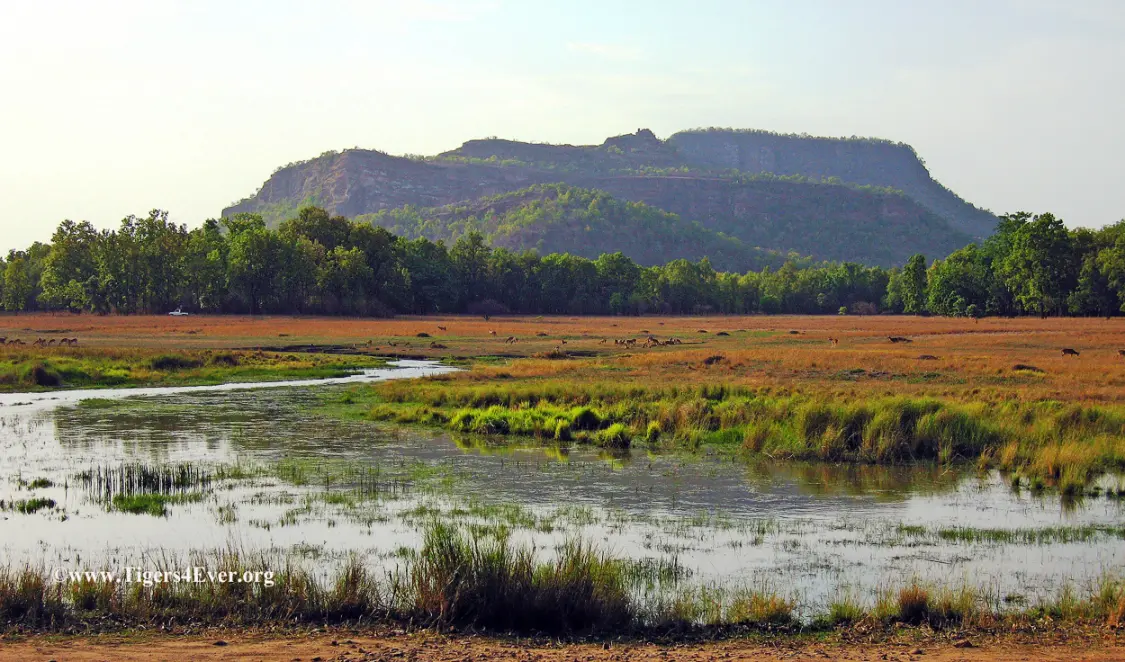
As highlighted above, when natural water sources dry up, wildlife can venture into human settlements in search of water, which in turn leads to conflict. Maintaining our waterholes within the protected areas helps reduce this risk.
Creating new, regenerating seasonal or reinforcing existing wildlife waterholes can revitalise degraded habitats and support the return of key species. This will be important as we regenerate lost wildlife habitat and expand wild tiger territories too, for more information see also our new habitat restoration project.
Tigers4Ever waterholes are useful locations for camera traps (during the wildlife and tiger censuses) and wildlife monitoring (throughout the year), as they provide valuable data both for conservation planning and for the measurement of conservation success. For example, without our 26 wildlife waterholes, it would be impossible to support the 226 wild tigers and their prey base in Bandhavgarh because there would be insufficient prey and water to keep wildlife from becoming entirely dependent on human settlements for survival.
Waterholes are more than just puddles in the forest, they are the keystones of survival for wild tigers and their ecosystems. Investing in the protection and restoration of our waterholes, and the construction of new waterholes is not only a conservation priority but a moral imperative in our fight to save one of the planet’s most iconic species. If you can support our efforts to reduce human-wildlife conflict and save wild tigers please donate whatever you can afford here.
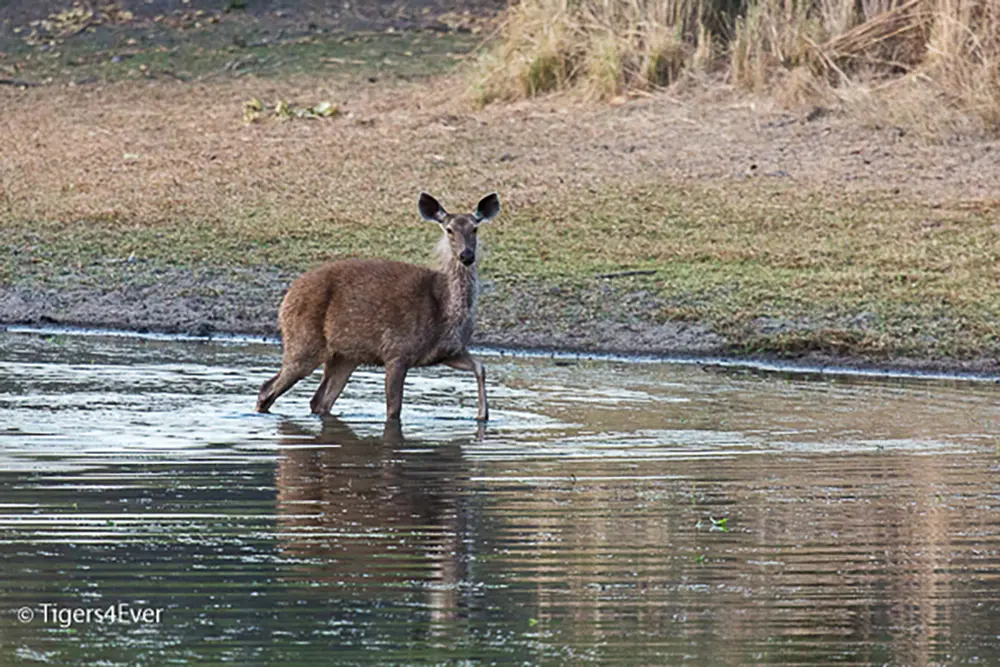
Tigers4Ever waterholes support a wide range of species from insects and amphibians to birds and large mammals, which makes them crucial biodiversity hubs. Our waterholes also play a critical role in quelling and extinguishing forest fires as other water sources are absent and the terrain is unsuitable for fire engines.
The presence of water promotes the growth of vegetation, which supports the herbivore populations and stabilises soil, thus reducing the risk of soil erosion.
In the face of increasing droughts and prolonged drought seasons due to climate change, Tigers4Ever waterholes act as buffers, helping local ecosystems to remain resilient.

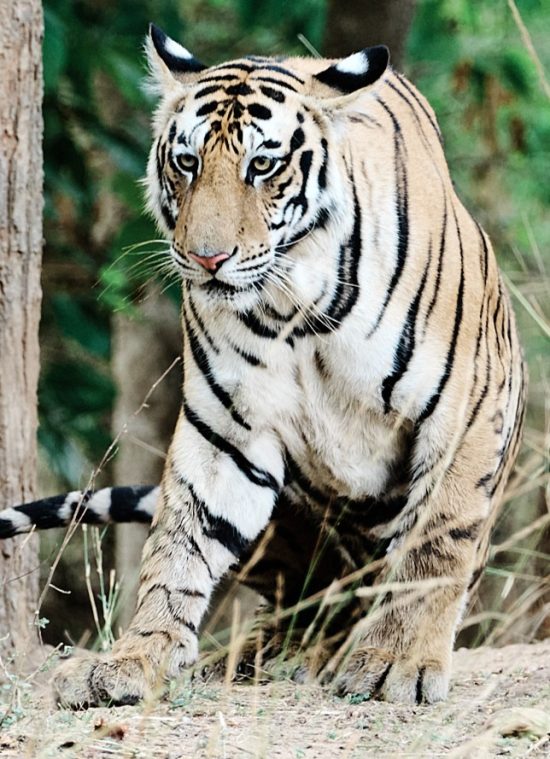
Since 2015 Bandhavgarh has been suffering from an acute water crisis due to erratic rainfall and long dry spells. Existing wildlife waterholes previously replenished by rainwater have become dry earlier each year. Wildlife then needs to look elsewhere for water, which increases human-animal conflict due to crop raiding and livestock predation. Each permanent Tigers4Ever waterhole we create will provide water for up to 9 wild tigers and countless other wildlife whilst reducing human-animal conflict.
Our project has provided solar powered borewell pump systems and improved waterholes since 2017 which provide permanent water at 24 locations – 8 large, 6 medium-large and 10 smaller ones for tigers and other wildlife. The borewells use underground sources to provide year-round wildlife water where there would be none. Surplus water returns via soak-away systems. We’ve installed systems to provide water for up to 125 wild tigers and countless other wildlife to date. In total our solar pumps provide water at 24 locations and we’re currently working towards our next solar-powered pump system which will bring the number of Tigers4Ever waterholes to 25 and the number of wild tigers helped to over 130. These waterholes help to reduce human-animal conflict in nearby villages. Your donations will help us to reduce human-animal conflict and save many animals via the provision of year-round water in other locations where conflict is rife.
The lives of thousands of wild tigers and other animals will be saved by the year round availability of water. This will lead to reduced human-animal conflict and will contribute to the conservation of the tigers’ environment & sustainability through ecologically focused actions.
Our ultimate goal is to prevent the extinction of wild tigers. It is vital that we eliminate wild tiger deaths due to poaching and retaliatory poisoning to ensure that wild tigers are around for future generations.